
A blind can look made for a room or look slightly wrong for years – and the difference often comes down to a few fractions of an inch. Before you measure window blinds, decide whether they will sit inside the window opening or cover it from the outside. That one choice affects every measurement that follows.
For many homeowners, measuring is the part that turns a simple room update into a stressful job. Uneven older windows, deep handles, tiled areas, bay windows, and doors can all complicate the process. The good news is that a careful approach gives you the information needed to choose the right style, while a professional measuring visit removes the risk altogether.
First, Choose Inside Mount or Outside Mount
An inside mount blind fits within the window recess or frame. It gives a neat, built-in appearance and keeps trim visible. This is often a smart choice for a clean, modern look, particularly with Venetian, roller, and night and day blinds.
An outside mount blind is fitted above or around the window opening. It covers more of the wall area, which can improve privacy and reduce light coming in around the edges. It is especially useful when the window recess is too shallow, the opening is not square, or you want to make a small window appear larger.
There is no single best option. Inside mounts usually look tidier, but they need enough recess depth and a reasonably clear opening. Outside mounts are more forgiving and can offer better coverage, but you need suitable wall or trim space for the brackets.
What You Need Before You Start
Use a good-quality metal tape measure marked in inches. Fabric tape measures can bend and give inaccurate results. You will also need a pencil or notes app, plus a step stool if the top of the window is out of reach.
Measure every window separately, even when two windows look identical. In many homes, openings differ by enough to affect the fit. Write down the room name, window location, width, height, and depth as you go. For example, label measurements clearly as “living room, front window” rather than relying on memory later.
Do not round measurements up or down. Record them exactly to the nearest eighth of an inch if possible. Made-to-measure suppliers will make the necessary deductions for an inside mount, so supplying altered measurements can lead to gaps or a blind that is too narrow.
How to Measure Window Blinds for an Inside Mount
For an inside mount, you are measuring the inside of the recess, not the glass. Start with the width. Measure across the opening at the top, middle, and bottom. Window openings can narrow slightly due to plaster, tile, or uneven frames. Use the narrowest of the three measurements.
Next, measure the drop or height on the left, center, and right side of the recess. Use the shortest measurement. This helps ensure the blind can operate without catching at the bottom.
Finally, measure the recess depth from the front edge of the opening to the glass or any obstruction behind it. This is particularly important for blinds with headrails, slats, or cassette systems. A shallow recess may not accommodate certain Venetian, Roman, or roller blind fittings.
Check for Obstructions
Before choosing an inside mount, look closely at what sits within the opening. Window handles, inward-opening vents, alarm sensors, tiled edges, and projecting trim can all interfere with the blind.
A handle does not always rule out an inside mount, but it may affect which blind system works best. For example, a roller blind can sometimes sit forward enough to clear a handle, while a deeper wooden Venetian may not. This is where seeing product samples and getting practical advice can save time and disappointment.
Measuring for an Outside Mount
Outside mounts are measured based on the area you want the blind to cover. Start by deciding where the brackets will be fixed – usually on the wall above the window, on the face of the window trim, or sometimes on the ceiling.
Measure the full width you want the blind to cover. As a general guide, allow at least 2 to 3 inches beyond each side of the opening where space allows. This helps block side light and provides better privacy. If the window is close to a wall, cabinet, or another window, you may need to reduce that overlap on one side.
For the height, measure from where you want the top of the blind to sit down to the point where you want it to finish. A blind mounted above the opening can make a low window look taller and give more clearance when fully raised. For bedrooms and media rooms, adding coverage above and below the window may also help reduce unwanted light.
Make sure there is enough room above the window for the bracket and headrail. This matters with Roman blinds, vertical blinds, and electric systems, which may need more space than a simple roller blind.
Measuring Tricky Windows and Doors
Some windows need more than a standard width and height measurement. Bay windows, for example, need careful planning so individual blinds do not clash when they operate. The angle between each section, the position of the brackets, and the depth of the blinds all matter.
For French doors, patio doors, and tilt-and-turn windows, consider how the door or window opens before selecting a blind. Perfect Fit blinds are often a practical option for suitable uPVC windows and doors because they fit neatly to the frame without drilling and move with the opening. They are particularly helpful where a standard blind could swing or get in the way.
For bathrooms and kitchens, measure with tiles, extractor switches, and splashback areas in mind. Moisture-resistant roller or Venetian options may be more suitable than fabric styles, depending on the room. In offices, retail spaces, or rental properties, ease of cleaning and durability can be just as important as appearance.
Common Measuring Mistakes to Avoid
The most common mistake is measuring only once. Taking three width and three height measurements for an inside mount takes a few extra minutes and can prevent an expensive fitting problem.
Another frequent issue is measuring the glass rather than the recess. Glass measurements are only relevant for certain frame-fitted systems. For most standard blinds, the fitting area matters far more.
People also forget to account for what happens when the blind is raised or opened. A Roman blind stacks at the top, vertical blinds need space to draw to one side, and Venetian slats need room to tilt. Think about window handles, doors, furniture, and the direction of sunlight before deciding which side controls and opening arrangement will work best.
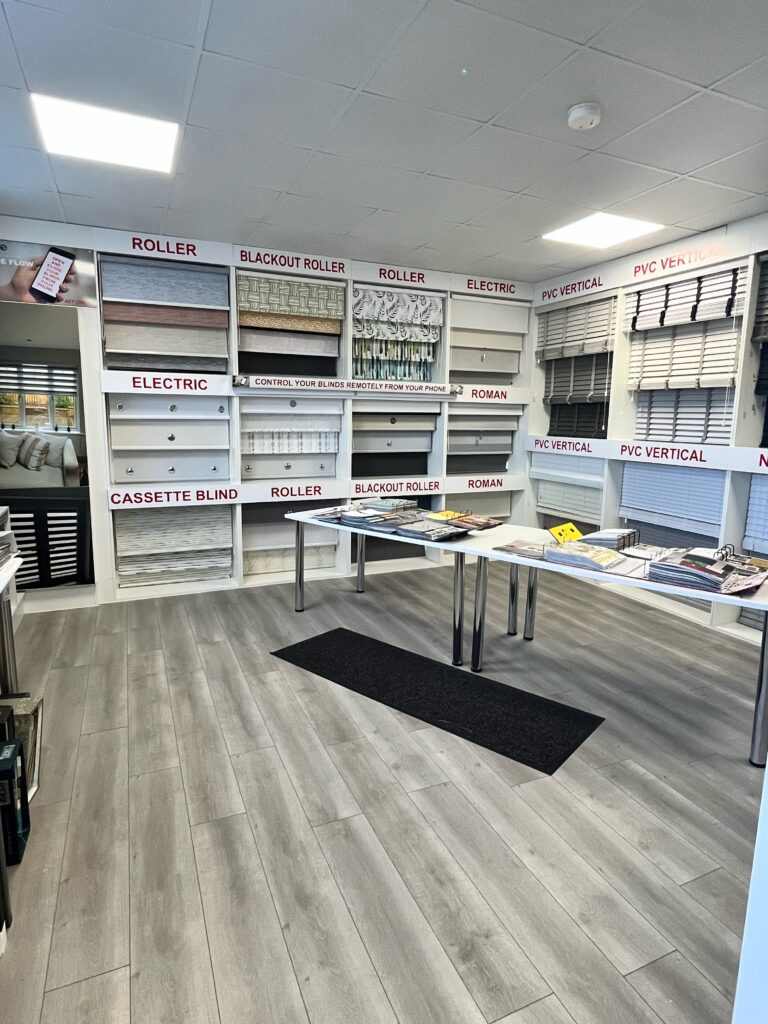
Finally, avoid ordering based only on an online image. The same blind can look very different in a bright south-facing room than it does in a softly lit showroom. Viewing colors, fabrics, and slat finishes in person makes it easier to choose something you will be happy to live with.
When a Professional Measure Is the Better Choice
DIY measuring can work well for a straightforward window and a simple blind. But if you have a bay window, unusual recesses, large spans, electric blinds, or multiple rooms to cover, a professional visit is often the more sensible route.
A fitter can check recess depth, identify hidden issues, advise on mounting positions, and confirm that the product you like will actually operate properly in the space. They can also recommend options for glare, privacy, insulation, and child-safe operation without pushing you toward a style that does not suit the room.
Cash N Carry Blinds provides free measuring and fitting, giving homeowners and local businesses the reassurance of an accurate fit before their blinds are made. With more than 30 years of experience and a showroom where you can compare fabrics and finishes, the process is designed to be straightforward rather than technical.
A well-measured blind should feel effortless once it is installed: it should clear the handle, sit neatly, control the light you want to control, and suit the room every day. If there is any doubt about the measurements, book a free home visit and let an experienced fitter take that uncertainty off your hands.