
A large window can make a room feel brighter, bigger, and more welcoming. It can also bring afternoon glare across the TV, heat up a south-facing room, or leave a bedroom feeling exposed after dark. This blinds for large windows guide is designed to make the choice simpler, with practical options that look right, work reliably, and suit the way you use the room.
The best answer is rarely one blind type for every home. Window width, ceiling height, direction of sunlight, privacy needs, and how often you want to adjust the blind all matter. A professionally measured blind also matters more on a large opening, where a small measuring error can be much more noticeable.
Start With What the Window Needs to Do
Before choosing a fabric or color, think about the job your blinds need to perform. In a living room, that may be softening glare without shutting out the daylight. In a bedroom, privacy and room darkening may come first. For a patio door or a wide office window, easy operation and clear access are often the deciding factors.
Large windows are not automatically difficult to cover, but they do need the right system. A very wide blind can become heavy, while one oversized piece may be less convenient to raise, lower, or clean. Splitting the opening into two or three coordinated blinds can give you more control and a neater result. You can close one side for privacy while leaving the other open for light.
It also pays to look at what surrounds the window. Radiators, deep sills, handles, and inward-opening doors can affect how a blind should be fitted. This is why an in-home measuring visit is valuable: the finished solution needs to work in the actual space, not just look good in a photo.
Blinds for Large Windows Guide: The Best Options
Vertical blinds for wide openings
Vertical blinds remain one of the most practical choices for wide windows, sliding doors, and commercial premises. Their individual louvers can be tilted to direct sunlight away from screens while still allowing daylight into the room. They also stack neatly to one side, which makes them a useful option where you want regular access to a door.
For a large living room window, modern vertical fabrics offer a much softer, smarter finish than many people expect. Choose a light-filtering fabric for a bright, relaxed feel, or a more opaque material where privacy is a priority. They are especially useful for extra-wide spaces because the weight is spread across individual louvers rather than one large panel.
Roller blinds for clean, simple coverage
Roller blinds are sleek, practical, and easy to coordinate with almost any decor. A single roller can work well on a moderately wide window, while multiple rollers are often the better solution for very large openings. This gives you flexible control over light and avoids the look and weight of one oversized blind.
The fabric makes a major difference. Sunscreen rollers are a strong choice for rooms with intense sunlight, as they reduce glare while helping you keep an outward view during the day. Blackout roller blinds are better suited to bedrooms, nurseries, media rooms, and shift workers who need a darker space. A plain neutral fabric can blend into the room, while a textured or patterned material can make the window a feature.
Venetian blinds for precise light control
Venetian blinds offer excellent control when a large window faces direct sun. Tilt the slats to cut glare, then raise the blind when you want the fullest view. Aluminum Venetians are light, durable, and well suited to kitchens, bathrooms, and workspaces. Wooden and faux wood styles bring warmer texture to lounges, dining rooms, and bedrooms.
There is a trade-off on very wide windows. Larger Venetian blinds can be heavier to lift than fabric options, particularly in wood. Dividing the width into separate blinds is often the more practical approach. It gives each blind a manageable size and lets you adjust different sections of the window independently.
Roman blinds for softness and style
Roman blinds are a popular choice where appearance matters as much as function. Their folds add warmth and a more furnished feel, making them ideal for large lounge, dining room, or bedroom windows. A lined Roman blind can improve privacy and help soften the feel of a cold window, while a blackout lining can make it more suitable for sleeping areas.
For a particularly wide window, consider using two matching Roman blinds rather than one. You keep the fabric-led look but gain easier everyday operation. Roman blinds are best where you do not need constant access through the opening and where their gathered fabric will not interfere with a door handle or window catch.
Day and night blinds for flexible living spaces
Day and night blinds combine alternating sheer and opaque fabric panels. By aligning the layers, you can filter sunlight, increase privacy, or open the sheer sections for more daylight. They suit modern kitchens, living rooms, and home offices where the light changes throughout the day.
On large windows, separate day and night blinds can provide impressive flexibility. You might screen the side where the sun is strongest while leaving the rest of the window open. They offer a contemporary look, although they may not provide the same room-darkening effect as a dedicated blackout blind.
Electric blinds for hard-to-reach windows
Tall windows, vaulted spaces, and wide banks of glass are ideal candidates for electric blinds. Effortless control at the touch of a button means you do not have to reach over furniture or struggle with a heavy blind. They are also useful when several blinds need to move together, such as across a wall of windows in a living area or commercial setting.
Electric operation costs more than a standard manual system, so it is most worthwhile when convenience, access, or safety is a genuine concern. For large windows that are used every day, it can turn an awkward task into a simple routine.
Choose the Right Light and Privacy Level
A large window does not need to be completely covered all day. The aim is to make the room comfortable at the times you use it. A west-facing lounge may need strong glare protection late in the day, while a front-facing room may need privacy in the evening but plenty of daylight in the morning.
Blackout fabrics are effective for bedrooms, but they will not always create total darkness around the edges of a blind. If complete room darkening is essential, the fitting method, fabric overlap, and any gaps around the window all need consideration. For living areas, light-filtering fabrics often offer the better balance: they reduce harsh sunlight without making the room feel closed in.
If the window is overlooked, consider how the blind works after dark. Some sunscreen fabrics provide excellent daytime privacy but become more transparent from the outside when lights are on indoors. A more opaque roller, vertical, Venetian, or Roman option may be better for a room that needs privacy at all hours.
Fitting Details Matter on Large Windows
Large windows make poor fitting more obvious. A blind that is slightly uneven, too narrow, or catches on a handle can spoil the whole effect. Recess fitting can give a tidy, built-in appearance when the window has enough depth and a clear opening. Outside-recess fitting can cover more of the glass and may reduce light gaps, which is particularly useful for blackout fabrics.
The headrail, brackets, and control position should be selected around daily use. If furniture sits below the window, a remote-controlled system or a control chain placed to one side may be more convenient. Safety devices are also essential for chain-operated blinds, especially in homes with young children or pets.
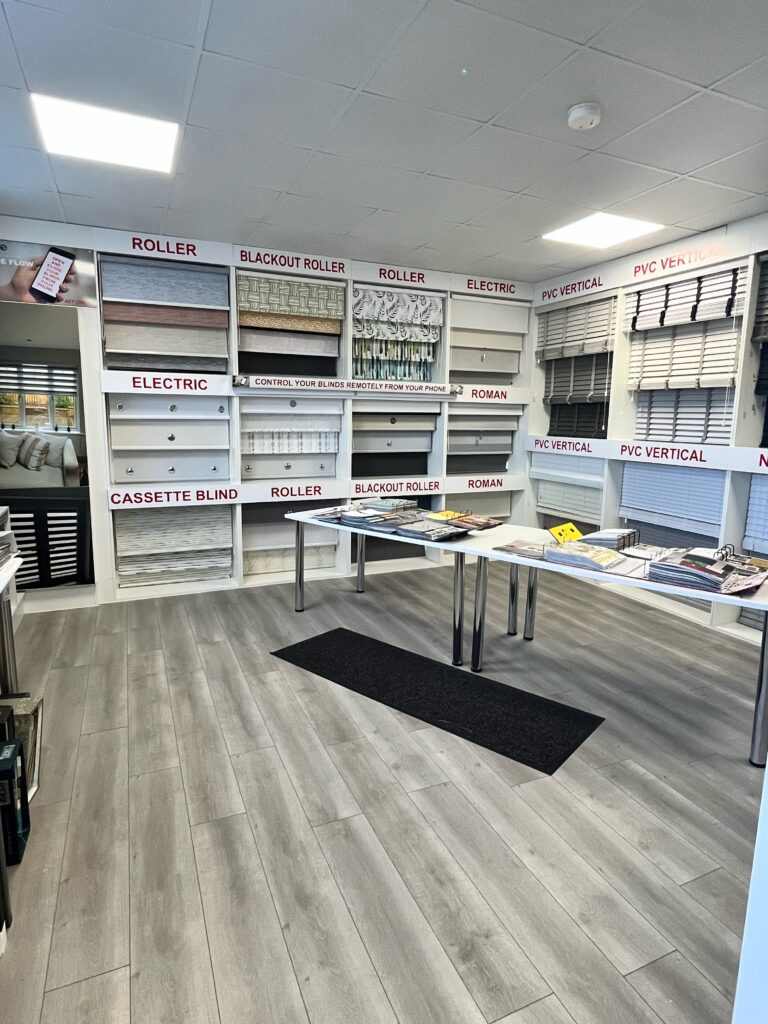
At Cash N Carry Blinds, a free home consultation, measuring visit, and professional fitting take the uncertainty out of these decisions. With more than 30 years of experience and a local showroom to view fabrics and samples, customers can see what suits their room before committing.
Match the Blind to the Room, Not Just the Window
A blind should support how the room feels and functions. Light-colored rollers can keep a compact kitchen airy. Wood-effect Venetians can add natural charm to a lounge. Soft Roman fabrics can make a bedroom feel more settled, while vertical blinds provide dependable control for a large patio door or office frontage.
For rental properties and commercial spaces, durability and easy cleaning may take priority over a decorative finish. For a family home, it may be worth investing in blackout fabrics upstairs, flexible light control downstairs, and electric operation for the windows that are hardest to reach. There is no need to force one style throughout the property when different rooms have different demands.
The most helpful next step is to stand in the room at the time of day it causes the most trouble, then decide what needs to change: glare, heat, privacy, access, or all four. That simple check will point you toward a blind solution that feels right long after it has been fitted.